
The Art of Afternoon Tea
A Brief History & Etiquette Guide
An invitation to slow down, savor the moment, and enjoy the timeless tradition of Afternoon Tea.
A Little History
Afternoon Tea is a beloved British tradition that began in the early 19th century.
During the 1840s, the Duchess of Bedford, Anna Maria Russell, is widely credited with establishing the custom of taking tea and a light meal in the afternoon. At the time, dinner was often served quite late in the evening, leaving a long stretch of time between lunch and dinner.
The Duchess began requesting tea, bread, butter, and small cakes in the afternoon. What began as a personal solution to afternoon hunger soon became a fashionable social occasion.
The tradition grew among the British upper classes, and afternoon visits for tea became an opportunity to gather with friends, converse, and enjoy beautifully presented refreshments.
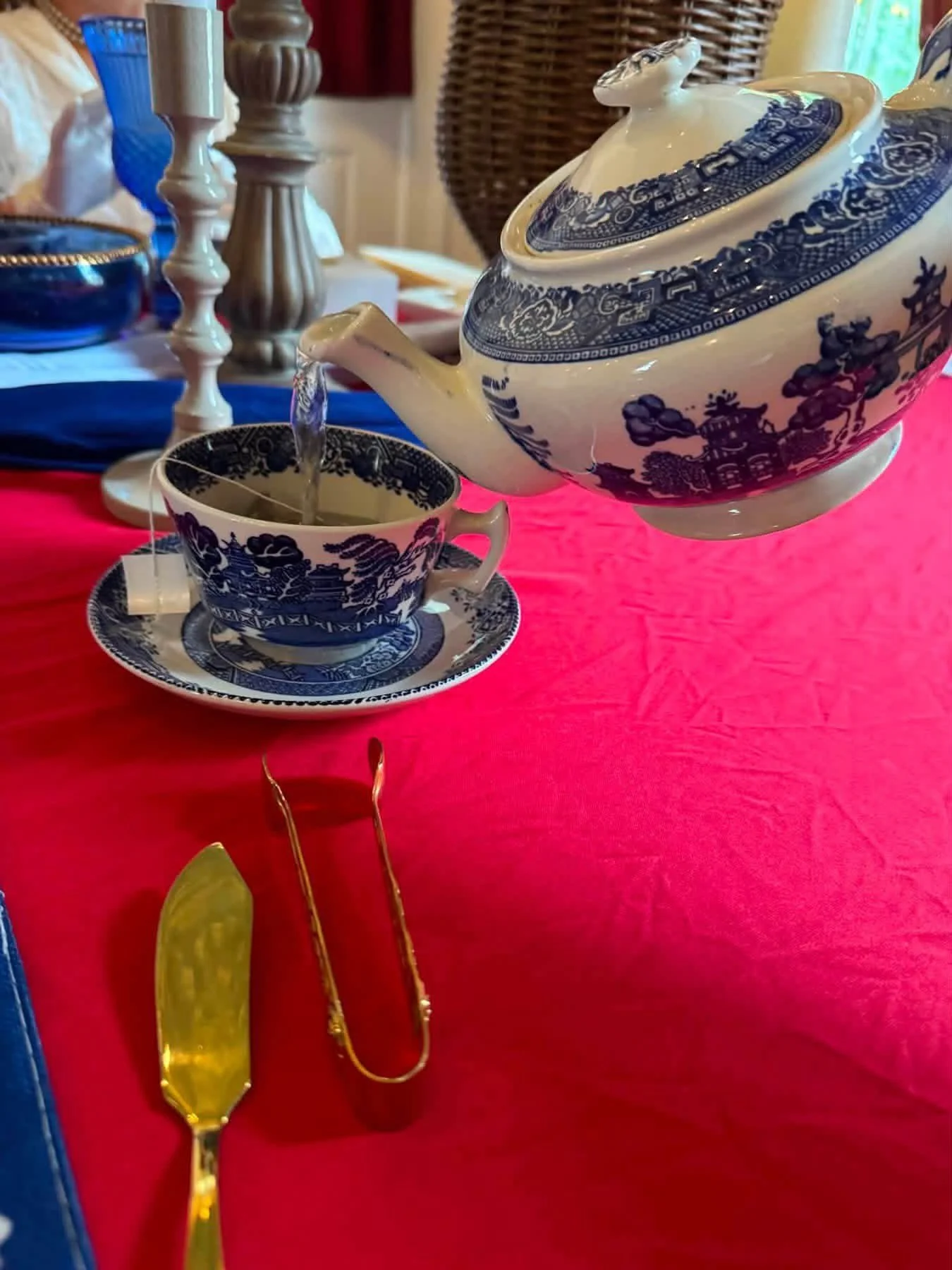
Over time, Afternoon Tea evolved into the elegant experience we recognize today—complete with delicate sandwiches, scones, pastries, fine china, beautiful linens, and, of course, a pot of tea.
Afternoon Tea vs. High Tea
One of the most common misconceptions is that Afternoon Tea and High Tea are the same thing.
They are not.
Afternoon Tea was traditionally a lighter social meal enjoyed in the afternoon. It was associated with elegance, conversation, and hospitality and was often served at a low table.
High Tea was traditionally a more substantial evening meal, often enjoyed by working and middle-class families. It might include hearty foods such as meats, vegetables, bread, and pies and was typically served at a dining table.
So when you join us for Afternoon Tea, you are participating in the tradition of a leisurely afternoon social gathering—not simply having "tea."
The Traditional Afternoon Tea
While every tea parlor has its own personality, a traditional Afternoon Tea commonly includes three tiers of delicious offerings.
The Bottom Tier — Savories
The lowest tier traditionally holds the savory portion of the tea.
You may find delicate finger sandwiches and other small savory bites. Traditional sandwiches might include cucumber, egg and cress, smoked salmon, or ham.
The emphasis is on small, elegant portions designed to be enjoyed comfortably with conversation.
The Middle Tier — Scones
The middle tier is traditionally reserved for scones.
Warm scones are commonly accompanied by clotted cream and preserves, allowing guests to create their perfect bite.
And yes—there is a long-standing debate about whether the cream or jam should be placed on the scone first!
The Top Tier — Sweets
The top tier traditionally features petite sweets and pastries.
Think cakes, tarts, petit fours, biscuits, and other beautiful little confections.
The tiered stand creates not only an elegant presentation but also a progression from savory to sweet.
Afternoon Tea Etiquette
Don't worry—there is no need to be nervous!
Afternoon Tea etiquette is not about knowing a thousand rules. It is primarily about grace, consideration, and enjoying the company around you.
Here are a few simple traditions to help you feel comfortable at the table.
1. Allow Your Host to Begin
When tea is served as part of a hosted experience, allow your host to introduce the tea and explain the offerings before beginning.
At Joyful Afternoon Tea, we may have a few surprises waiting for you!
2. Hold Your Teacup by the Handle
Lift your teacup by the handle rather than wrapping both hands around the cup.
And despite what you may have seen in movies...
Please don't extend your pinky finger!
The raised pinky is more theatrical than traditional etiquette.
3. Never Dunk Your Food
Your tea is not a cookie-dunking station.
While it may be tempting, traditionally your food should be eaten separately from your tea rather than dipped into the cup.
4. Stir Gently
When adding sugar or milk, stir your tea gently.
The traditional motion is a quiet back-and-forth movement rather than vigorously swirling the spoon around the cup.
Try not to let your spoon clink against the china.
Once finished stirring, place the spoon quietly on the saucer.
5. Tea Before Milk?
There is a long history surrounding the question of whether milk should be added before or after tea.
Today, either may be encountered depending upon the tea and personal preference.
At Joyful Afternoon Tea, we believe your tea should be enjoyed the way you like it.
After all, hospitality is about making you comfortable.
6. How to Hold Your Teacup
When drinking tea, lift the cup toward your mouth.
There is no need to lift the saucer along with it unless you are standing or moving away from the table.
And remember: small, graceful sips are part of the experience.
7. Napkin Etiquette
When you are seated, place your napkin on your lap.
Use it gently throughout the meal.
If you need to leave the table temporarily, place your napkin on your chair rather than on the table.
At the end of the tea, your host will signal when the experience has concluded.
8. Eating the Sandwiches
Afternoon Tea is traditionally enjoyed with small, manageable bites.
Finger sandwiches are generally eaten with your fingers rather than with a knife and fork.
Take your time.
There is no need to rush through the tiers.
9. The Proper Way to Eat a Scone
Scones are traditionally broken into manageable pieces rather than cut entirely in half with a knife.
Add your cream and preserves to the individual piece.
And if someone asks...
Cream first or jam first?
That depends on which side of the great scone debate you stand on!
10. Enjoy Your Tea in Courses
A traditional Afternoon Tea is meant to be leisurely.
Take your time enjoying each tier rather than trying to finish everything at once.
Part of the magic of Afternoon Tea is the opportunity to pause, talk, laugh, and enjoy the people around you.
A Few Things You Don't Need to Worry About
At Joyful Afternoon Tea, we want you to feel welcomed—not tested.
You don't need to know which fork belongs to which course.
You don't need to know the history of every piece of china.
You don't need to have attended Afternoon Tea before.
And you certainly don't need to be an etiquette expert.
That's what your host is here for.
Simply arrive ready to enjoy yourself.
The Spirit of Afternoon Tea
More than anything, Afternoon Tea is about hospitality.
It is an opportunity to step away from the hurried pace of everyday life and enjoy something intentionally beautiful.
A pot of tea.
A beautifully set table.
A delicious bite.
A good conversation.
A little laughter.
And perhaps a touch of imagination.
At Joyful Afternoon Tea, we believe the most important etiquette rule is simple:
Be gracious. Be curious. Be present.
The rest is easy.
So straighten your hat, settle into your chair, pour yourself a cup of tea...
and let the afternoon begin.
A Note from Madam Joy
“There is always time for tea when the company is good.”
Welcome to the table.
Madam Joy
Joyful Afternoon Tea